












Arena Burgas, three live shows, and a Black Sea backdrop: the 71st Eurovision Song Contest found a home
Bulgaria has its host city, and it’s not the capital. The European Broadcasting Union (EBU) and Bulgarian National Television (BNT) have officially confirmed that Burgas, the country’s fourth-largest city on the Black Sea coast, will host the 71st Eurovision Song Contest in May 2027. The announcement follows Dara’s historic win for Bulgaria at Eurovision 2026 in Vienna with “Bangaranga,” which secured the nation’s first-ever Eurovision victory and, with it, the right to host for the first time. Four cities were competing hard for the privilege to host — Burgas, Plovdiv, Sofia, and Varna — before the race narrowed to a final “battle” between Burgas and the capital, Sofia.
More: Eurovision goes global: Eurovision Asia to launch in Bangkok this November
So why Burgas? The city’s bid impressed organisers with its accommodation capacity, international airport, transport connections, and a modern venue ready to go: Arena Burgas, which opened in 2023 and can hold up to 15,000 spectators for concerts.
The Grand Final is set for Saturday, 15 May 2027, with Semi-Finals on Tuesday, 11 May and Thursday, 13 May. Fans will also get six additional Preview Shows between 10 and 15 May, with ticket access reserved for members of Eurofan, the official free fanclub. Sofia, Plovdiv, and Varna haven’t been left out entirely — BNT plans to include all three into the wider Eurovision program surrounding the main event in Burgas.
Martin Green CBE, Director of the Eurovision Song Contest, commented with enthusiasm:
“Burgas brings something really special to the Eurovision Song Contest. It is a vibrant, welcoming city on the Black Sea with a strong musical and cultural identity, and it has the ambition, infrastructure and passion needed to welcome the Eurovision family.”
BNT Director General Milena Milotinova called the selection process “intense and highly competitive,” while Burgas Mayor Dimitar Nikolov framed it as a national effort rather than a local one: “This is not about one city hosting Eurovision. This is Bulgaria hosting Eurovision – an entire community, united and inspired.” Even Bulgaria’s President Iliana Iotova weighed in with a message on Facebook, tying the contest to the city’s own musical legacy:
“Burgas has long-standing musical traditions, is the birthplace of some of our best artists and hosts emblematic competitions such as ‘Burgas and the Sea’, and now also ‘Eurovision’.”
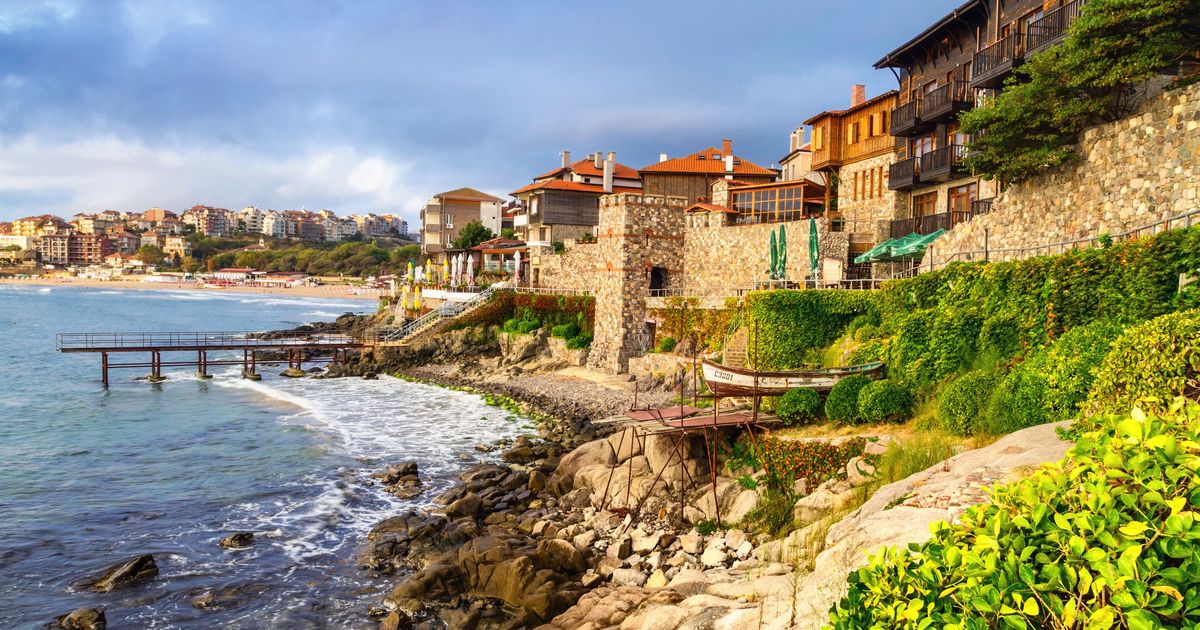
Beyond the arena, Burgas is boasting to be Eurovision’s first true beach destination. The city is known for its Sea Garden waterfront park, relaxed café culture, and a packed calendar of summer music and arts festivals — a very different vibe from recent hosts like Malmö, Basel, or Vienna. And hosting Eurovision tends to pay off: Liverpool saw a €66 million economic boost in 2023, Malmö €40 million in 2024, and Basel €58 million in 2025 (with a reported €272 million boost for Switzerland nationally). Speaking of last year’s Vienna edition, the contest resulted in 88,000 extra city visitors, 160,000 hotel rooms sold, and an estimated €57 million boost for the Austrian capital.
With ticket sales expected later in 2026 and a full Eurovision Village, EuroClub, and Opening Ceremony program still to be unveiled, the countdown to Bulgaria’s first-ever Eurovision is officially on. Nineteen countries have already confirmed their participation in 2027, including Canada, making its Eurovision debut, and North Macedonia, returning after skipping 2026. Mark your calendars for 15 May 2027 and start planning your warm Black Sea holiday next year well in advance, as Eurovision 2027 promises to be hot in all senses.
Follow us and drop your thoughts right now on Blog’o’vision Facebook, Instagram, TikTok and AlteRock X!

 and Bulgarian National Television (BNT) have officially confirmed that Burgas, will host...)